
Andy Weir’s first contact novel is a few years old, but with the upcoming film dropping trailers everywhere, I thought I’d give it a read. The experience was as engaging a read as listening to a burned out high school teacher lecturing verbatim from a dog-eared textbook.
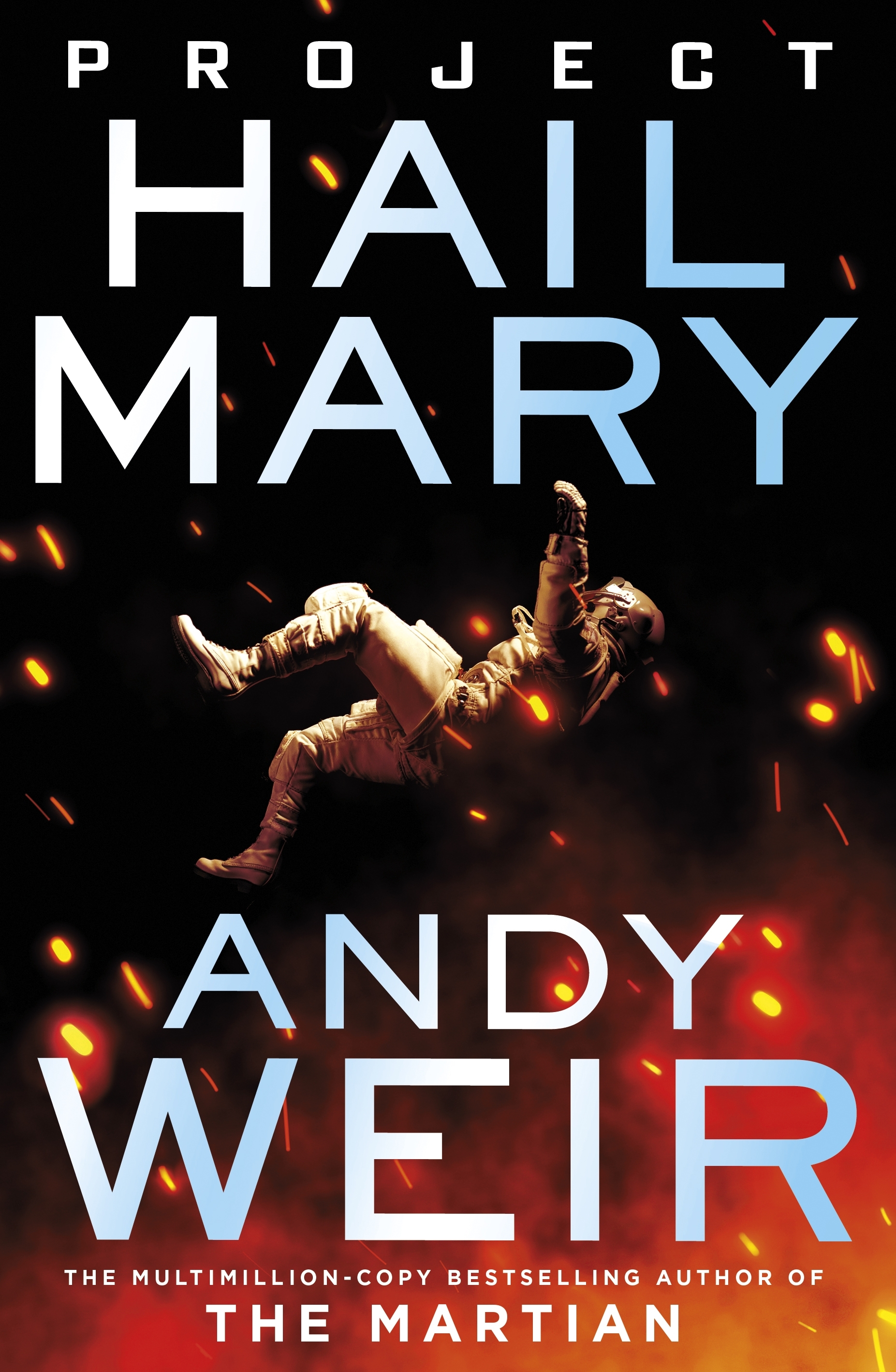
There is, obviously, an audience for Weir’s work. His books, including 2011’s The Martian, have enjoyed popular success, film adaptation, and nods from the scientific community. They have been credited with igniting scientific interest in younger generations. How laudable is that? They have inspired conversation and policy. But, from a guy who really cares about getting the science right, he is objectively clueless to the basic elements of story.
The premise couldn’t be more ridiculous. Our protagonist, Ryland Grace, is relegated to teaching middle school after publishing a paper suggesting that life might evolve without the presence of water. I’m not a scientist, but even I know the idea has be among the scientific conversation for years. It’s not a controversy. Still, this just is one of many eye-rolls to come: ESA administrator Eva Stratt taking totalitarian level control of world decision making, Grace’s selection as astronaut savior (ala Armageddon), a laughable court sequence to explain away international law, the hours long deciphering of alien language, and on and on. To enjoy a story, there has to be a suspension of disbelief. We’re willing to go along within limits. Weir insults us on a narrative level to satisfy his own interests.
The novel, if it can be called that, is a non-stop exposition of scientific concepts the reader neither needs nor cares about. Exposition pours from the characters, lacking any humanity, in dialogue that sounds more like the author than any living person. The character’s exist only to explain. They are hollow vehicles. We pause relentlessly to listen to what, I guess, Weir is just dying to tell us: theories, calculations, deus-ex-machina plot corrections. Project Hail Mary isn’t a novel. It’s a science nerd’s vanity project.
Can the film be good? Sure. If it can correct Weir’s incompetent storytelling, inject some comedy into the nonsense premise, and rewrite some of the worst dialogue published. The benefit of the format (film) could strip away the author’s condescending voice and give us some actual humanity. But, it is a tall order.
Sure, Project Hail Mary has an audience. Sure, Weir has managed to capture the science minded. What he lacks is the ability to write: write character, write believable conflict, write stories that transport the reader. His work is as sterile as a lab. He needs to think more about the organic carbon based lifeforms he professes to protect and less about the mathematical abstractions.
Until Weir figures out that the human story matters, we would all be better served reading Asimov, Sagan, Bradbury, Butler, Angier, Zimmer, etc. Weir is not worth the reader’s emotional investment.




 Tiny Table 3
Leave a comment